Uniforms That Work: How to Balance Comfort, Durability and Professional Appearance
Choosing the right uniform goes beyond appearance. This guide explains how businesses can balance comfort, durability, and professional appearance by considering fabric, fit, working environment, maintenance, employee needs and long-term value.

Durable and Comfortable Uniforms: How to Balance Comfort, Durability, and Professional Appearance
A uniform can look excellent on a hanger and still fail completely once someone has to wear it for eight or ten hours.
That is something businesses sometimes discover only after the uniforms have already been ordered.
The shirt looked crisp in the sample. The color matched the brand perfectly. The logo was positioned exactly where it was supposed to be.
Then the real working day began.
Someone had to sit in it through a long office shift. Someone else had to move around a warehouse. Another employee had to spend hours meeting customers. Someone had to wash it, iron it, and wear it again the following week.
Suddenly, the conversation was no longer about how the uniform looked.
It was about whether the collar stayed comfortable, whether the fabric allowed enough movement, whether it wrinkled easily, whether the color held up after repeated washing, and whether employees actually wanted to wear it.
That is the real test of durable and comfortable uniforms.
A good uniform has to work when nobody is looking at it.
And for businesses, that means finding the right balance between three things:
Comfort. Durability. Professional appearance.
None of these should be treated as an afterthought.
Why Choosing a Uniform Is More Complicated Than It Looks
When businesses begin planning uniforms, the first discussion is often about appearance.
"What color should the shirt be?"
"Should we use the company logo?"
"Would a polo look better than a formal shirt?"
"Should everyone wear the same thing?"
These are important questions, but they are not the first questions that should be asked.
The better starting point is
What does the employee actually do during the day?
A receptionist, hotel housekeeping employee, sales executive, factory supervisor, and delivery executive may all work for the same company, but their clothing requirements can be completely different.
The receptionist may prioritize appearance and comfort.
The factory employee may need abrasion resistance and freedom of movement.
The sales executive may need something that stays presentable while travelling.
The housekeeping team may need fabric that can tolerate frequent washing.
The uniform should therefore be designed around the working environment, not simply around the company logo.
1. Comfort: Because Employees Actually Have to Wear the Uniform
This sounds obvious.
Yet comfort is surprisingly easy to overlook.
Imagine receiving a new uniform at work. It looks sharp. The company logo is beautifully embroidered. The color is exactly right.
You put it on at 9:00 AM.
By 1:00 PM, you are already adjusting the collar.
By 3:00 PM, you are wishing the fabric was lighter.
By 6:00 PM, you are counting the minutes until you can change.
Technically, the uniform has done its job.
Practically, it hasn't.
Employees spend a significant part of their working day inside their uniforms. So the fabric, fit, and construction have to work with the person wearing them.
What affects comfort?
Several small details make a surprisingly large difference:
Fabric breathability
Garment weight
Fit
Collar construction
Sleeve design
Stretch and movement
Seam placement
Moisture management
Temperature of the working environment
This is particularly important in India, where a uniform designed for an air-conditioned office may perform very differently when worn outdoors or in a warm production environment.
2. Durability: The Uniform Has to Survive Real Life
The second test starts after the first few weeks.
This is where many uniform decisions reveal whether they were based on quality or simply appearance.
A uniform may be washed dozens of times during its useful life. It may be exposed to sweat, dust, sunlight, friction, food stains, frequent ironing, and sometimes much harsher working conditions.
A garment that looks fantastic on day one but loses its shape or color quickly is not necessarily a good investment.
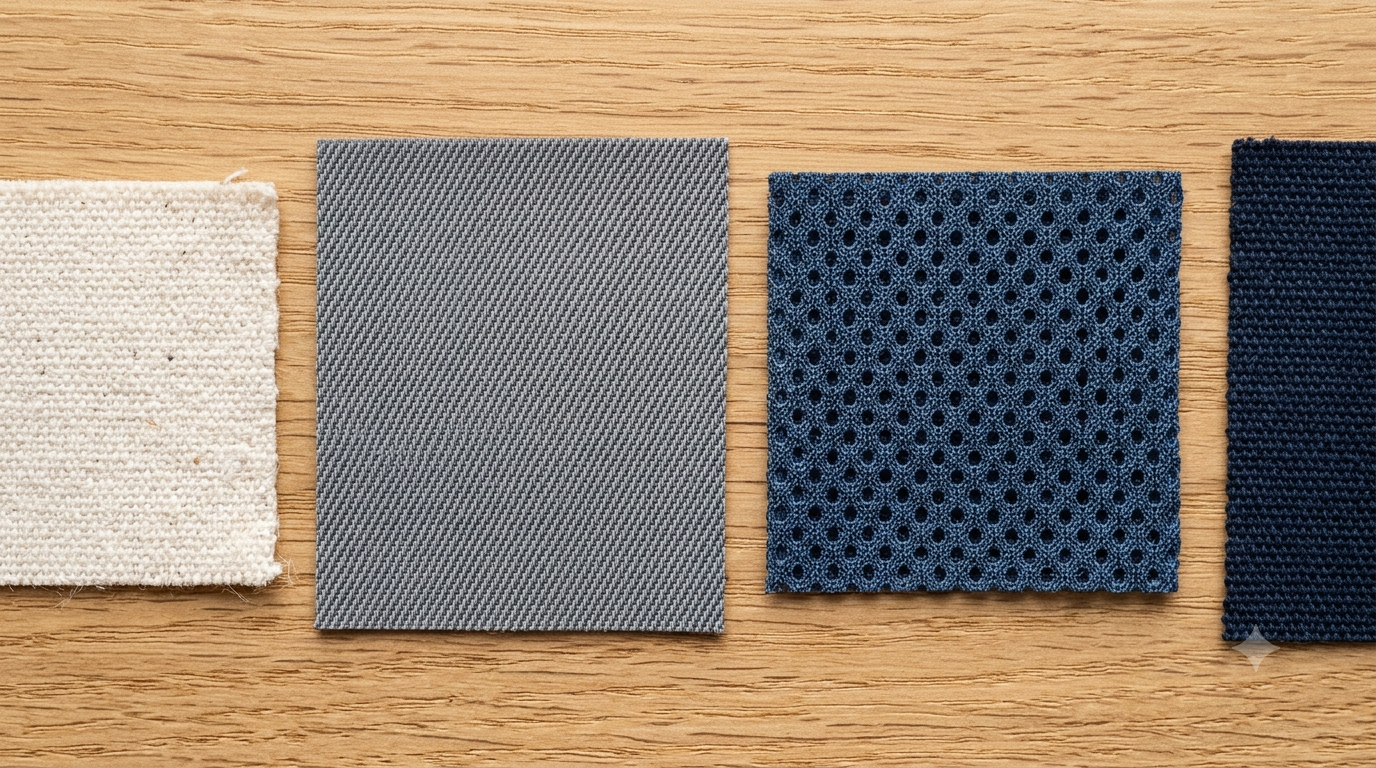
This is why fabric composition matters.
Cotton
Cotton is comfortable, breathable, and familiar. It can be an excellent choice where comfort is the primary requirement.
However, depending on the fabric and care process, cotton can be more prone to shrinkage and wrinkling than some synthetic or blended alternatives.
Polyester
Polyester is known for durability, shape retention, and quick drying.
It can be useful where uniforms experience frequent washing or demanding daily use.
But a polyester garment isn't automatically comfortable simply because it is durable. Fabric construction and finishing matter, particularly in hot environments.
Poly-Cotton
This is where things become interesting.
A cotton-polyester blend can provide a practical middle ground: some of the comfort associated with cotton combined with the durability and easy-care characteristics associated with polyester.
For many general-purpose uniforms, that balance can make more sense than choosing either extreme.
But again, the blend ratio alone doesn't tell the whole story.
Two garments can both say "poly-cotton" on their specifications and still feel completely different.
That is why a uniform specification should consider more than just the fabric name.
For a useful comparison of cotton, polyester, and poly-cotton workwear, this fabric guide provides a helpful starting point.
3. Professional Appearance: Looking Good Is Still Part of the Job
Function comes first.
But appearance still matters.
A uniform is often one of the first visual signals a customer receives from a business.
Think about walking into a hotel.
Before anyone explains the hotel's service standards to you, you have already formed an impression based on the environment, the staff, and how consistently everything appears to be presented.
The same happens in a clinic.
The same happens at a showroom.
The same happens when a technician arrives at a customer's home.
The uniform becomes part of the experience.
But professional appearance doesn't necessarily mean expensive clothing.
Often, it means:
Consistent colors
Correct sizing
Clean finishing
Good fit
Properly positioned branding
Consistent embroidery
Appropriate styling
Garments that retain their shape
Employees who look comfortable wearing them
In other words, "professional" does not have to mean "complicated."
Sometimes a clean, well-fitted polo shirt with restrained branding looks far more professional than an overly designed uniform.
4. The Fit Matters More Than Most Businesses Expect
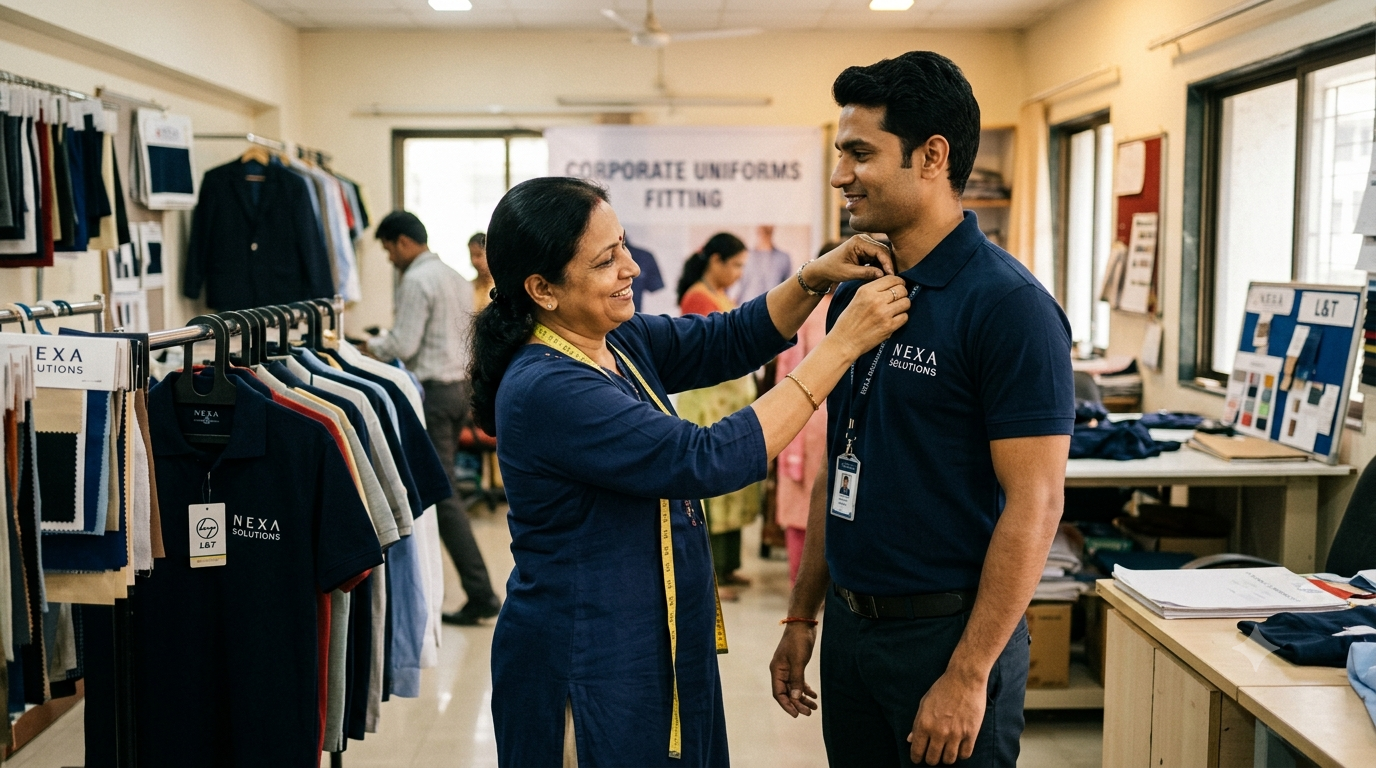
One of the easiest ways to make a good uniform look bad is to get the fit wrong.
A technically excellent shirt can still look unprofessional if one employee is swimming in it while another can barely move their arms.
This becomes particularly challenging when uniforms are ordered in bulk.
A company may have 20 employees.
Or 200.
Or 2,000.
Suddenly, "What size are you?" becomes a surprisingly important operational question.
A proper uniform program should therefore include a clear sizing process.
Ideally, employees should have access to size samples before the final order is placed.
It is much cheaper to discover that a size is wrong before producing hundreds of garments than after.
This is one of those boring administrative steps that nobody remembers when everything goes well—and everyone remembers when it goes badly.

5. Design the Uniform Around the Role
A common assumption is:
One company = one uniform.
That isn't always necessary.
A better approach can be
One brand identity = multiple role-appropriate uniform designs.
For example:
Role | Uniform Priority |
|---|---|
Reception / Front Office | Appearance + comfort |
Sales Team | Professional appearance + movement |
Field Staff | Durability + comfort |
Warehouse Staff | Strength + flexibility |
Housekeeping | Easy maintenance + durability |
Technicians | Functional movement + protection |
Management | Formal appearance + brand consistency |
The colors, logo treatment, and overall visual identity can remain consistent while the actual garments change according to the employee's role.
This creates something much more useful than identical clothing.
It creates a uniform system.
6. Indian Climate Changes the Equation
A uniform designed for one climate may not perform equally well everywhere.
This matters enormously in India.
An employee working in a cool office environment has different requirements from someone working outdoors in a warm or humid environment.
Heat, humidity, direct sunlight, and long working hours can quickly expose weaknesses in fabric selection.
A fabric that feels perfectly acceptable for an hour may feel very different after eight hours.
A collar that feels fine at 10 AM can become surprisingly irritating by late afternoon.
That is why climate should be considered at the beginning of the uniform design process rather than treated as a minor detail.
For warm environments, breathability, garment weight, moisture management, and movement deserve particular attention.
For colder environments, layering becomes more important.
For outdoor teams, durability and protection may take priority over purely aesthetic considerations.
The uniform should respond to the environment.
Not fight against it.
7. Think About the Uniform After It Is Delivered
There is another question businesses often forget to ask:
What happens after the uniforms arrive?
Uniform design doesn't end at delivery.
The organization has to wash them, maintain them, replace damaged pieces, and eventually reorder them.
This is why care requirements should be considered during selection.
Ask:
How frequently will the garments be washed?
Will employees wash them at home?
Will the company use a laundry service?
What washing temperature is expected?
Will the garments be ironed regularly?
Will colors need to remain consistent over repeated orders?
How easy will it be to replace individual garments?
Will the same fabric still be available next year?
That final question is particularly important for organizations running long-term uniform programs.
A uniform should not become impossible to reproduce simply because the original fabric is no longer available.
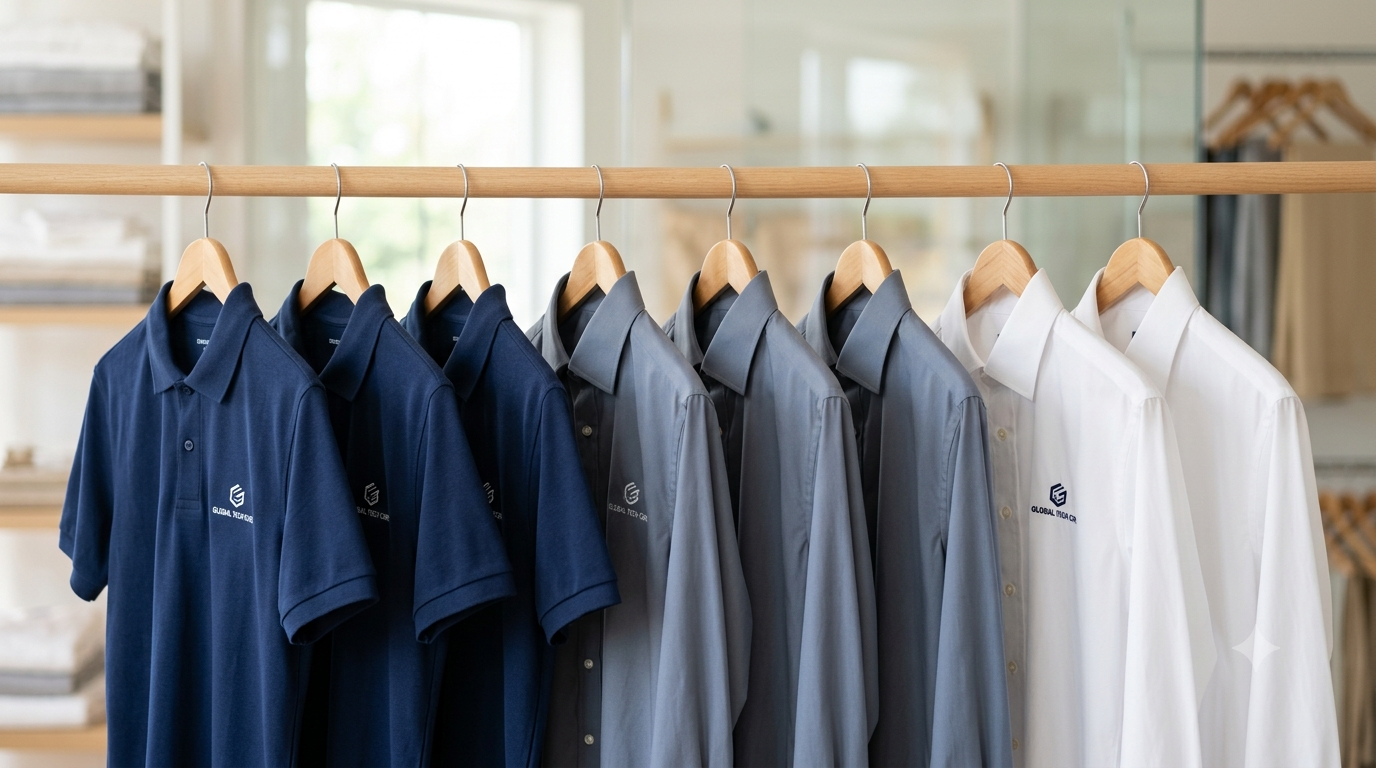
8. Don't Judge a Uniform by the First Day
This may be the most useful rule of all.
When evaluating a uniform, don't ask only:
"How does it look today?"
Ask:
"How will it look six months from now?"
Imagine the garment after:
20 washes.
50 washes.
A summer of daily use.
A few long shifts.
A few accidental spills.
Repeated ironing.
Regular movement.
That is when the real quality of a uniform becomes visible.
Some of the most important uniform decisions are therefore invisible on the day of delivery.
The stitching.
The fabric construction.
The finishing.
The colour fastness.
The fit.
The consistency between batches.
The ability to reorder.
These details rarely appear in a photograph.
They appear in the life of the garment.
9. The Cheapest Uniform Is Not Always the Most Economical
Price is important.
Especially when ordering hundreds or thousands of pieces.
But purchase price and actual cost are not always the same thing.
Suppose Uniform A costs ₹900 and Uniform B costs ₹1,100.
At first glance, Uniform A looks cheaper.
But imagine Uniform A loses its appearance quickly and needs replacement considerably sooner.
Uniform B costs more initially but survives significantly longer.
The calculation changes.
This is why businesses should think about cost per use, rather than only cost per garment.
A useful procurement conversation is therefore not:
"How much does one uniform cost?"
It is:
"How much value will this garment provide over its useful life?"
That shift can lead to much better purchasing decisions.
10. Don't Forget the Human Being Inside the Uniform
Specifications are useful.
Fabric compositions are useful.
Measurements are useful.
But there is a person inside the garment.
Someone who may spend eight hours wearing it.
Someone who may work in heat.
Someone who may travel.
Someone who may bend, sit, lift, walk or stand throughout the day.
That is why good uniform design starts with empathy.
Ask:
What will this feel like at 9 AM?
Then ask:
What will it feel like at 6 PM?
And finally:
What will it look like after six months?
Those three questions can prevent a surprising number of poor uniform decisions.
A Simple Uniform Selection Checklist
Before placing your next bulk uniform order, ask these ten questions:
1. Who will wear it?
Different roles may require different designs.
2. Where will they work?
Office, outdoor, factory, hotel, hospital, showroom and field environments have different needs.
3. How long will they wear it each day?
A short customer-facing interaction and a 10-hour shift require different thinking.
4. What fabric suits the job?
Don't choose fabric simply because it is inexpensive or familiar.
5. How often will it be washed?
The care cycle affects durability.
6. Does the fit allow movement?
A uniform should support the employee's work rather than restrict it.
7. How will the brand be represented?
Consider colour, logo placement, embroidery, typography and overall visual consistency.
8. Can employees try samples before bulk production?
Whenever possible, yes.
9. Can the uniform be reordered consistently?
Think beyond the first purchase.
10. What is the cost over the garment's useful life?
The lowest purchase price isn't necessarily the lowest total cost.
Final Thought
A uniform sits at an unusual intersection.
It has to satisfy the business.
It has to represent the brand.
And, most importantly, someone has to wake up the next morning and actually wear it.
That last part is easy to forget.
The best uniform is not necessarily the one that receives the most compliments when it is unveiled.
It is the one that still feels right after a long working day.
It still looks professional after repeated washing.
It still represents the brand months later.
And employees don't spend their day thinking about how uncomfortable it is.
That is when comfort, durability and professional appearance stop being three separate objectives — and become one well-designed uniform.
Frequently Asked Questions
What is the most important factor when choosing an employee uniform?
There is no single factor. The uniform should be selected based on the employee's role, working environment, climate, expected wear, maintenance requirements and desired brand appearance.
Which fabric is best for corporate uniforms?
There is no universal answer. Cotton can offer excellent comfort and breathability, polyester can provide durability and easy maintenance, while cotton-polyester blends can provide a practical balance between the two.
Are expensive uniforms always better?
No. Price alone does not determine quality. Fabric, construction, fit, finishing, durability and suitability for the job are more meaningful indicators.
Should every employee in a company wear the same uniform?
Not necessarily. A company can maintain a consistent brand identity while using different garments for different roles and working environments.
Why is uniform fitting important for bulk orders?
Incorrect sizing can result in uncomfortable employees, inconsistent appearance and additional alteration or replacement costs. Sample sizing before bulk production can help reduce these problems.
How often should company uniforms be replaced?
There is no universal replacement period. It depends on the garment, fabric, working environment, washing frequency and condition of the uniform. Businesses should assess actual wear rather than relying only on a fixed calendar.
About Uniformat
Uniforms are not simply garments carrying a company logo. They are part of how an organisation presents itself, how employees experience their working day and how consistently a brand appears across every customer interaction.
At Uniformat, the focus is on finding the right balance between design, comfort, functionality and durability for the people who will actually wear the uniform.
Because a uniform should work for the business — but it should also work for the person wearing it.
Looking for uniforms designed around your team's work?
Talk to Uniformat about your requirements, preferred styles, employee count and working environment. We'll help you identify the right approach before you place a bulk order.
Request a bulk quoteTags
- #Corporate Uniforms
- #Workwear
- #Uniform Fabric
- #Employee Comfort
- #Durable Uniforms
- #Custom Uniforms
- #Workwear India