Crafting the Ideal Uniform: A Fusion of Durability and Comfort
A good uniform needs to do more than look professional. This guide explains how fabric, fit, construction, climate, working conditions, and maintenance all influence whether a uniform remains comfortable and durable throughout its working life.

There is a simple test for a good uniform.
Don't look at it when it is brand new.
Give it to someone on a Monday morning.
Let them wear it for eight hours.
Ask them about it at the end of the day.
Then repeat the exercise after a few weeks.
The answers will tell you much more than a photograph ever could.
Was it comfortable?
Did it restrict movement?
Did it become uncomfortable in the heat?
Did it wrinkle easily?
Did the colour hold?
Did the collar retain its shape?
Did the stitching survive regular use?
And perhaps the most revealing question:
"Would you actually want to wear this again tomorrow?"
That is the difference between designing a uniform that looks good and designing one that works.
The ideal uniform has to satisfy two requirements that can sometimes pull in opposite directions:
It needs to be comfortable enough to live in and durable enough to work in.
Getting that balance right is where thoughtful uniform design begins.
Comfort and Durability Are Not Opposites
It is easy to think of uniform selection as a trade-off.
Soft fabric must be less durable.
Durable fabric must be uncomfortable.
Lightweight fabric must be fragile.
Heavy fabric must be stronger.
But reality is more complicated.
Fabric construction, fibre composition, weave, finishing, garment design, and the conditions in which the uniform is used all influence performance.
For example, cotton is generally valued for comfort and breathability, while polyester is known for durability, shape retention, and quick drying. Blended fabrics can combine some of these characteristics.
So the objective isn't to find the strongest fabric.
Nor is it to find the softest fabric.
The objective is to find the material and construction that make sense for the job.
Start With the Person, Not the Fabric
One of the easiest mistakes in uniform selection is starting with:
"Which fabric should we buy?"
A better question is
"Who is going to wear this, and what will they do in it?"
Consider two employees.
The first works at a reception desk.
The second spends most of the day moving between warehouses, loading areas, and customer locations.
They may work for the same company.
They may even need the same brand colours.
But their uniforms don't necessarily need to be identical.
The receptionist may value:
A polished appearance
Breathability
Easy ironing
Comfortable sitting
A refined fit
The field employee may need:
Freedom of movement
Greater durability
Easy washing
Quick drying
Resistance to frequent wear
The job should influence the uniform.
Not the other way around.
Fabric: The Foundation of the Uniform
Fabric is one of the most important decisions in uniform development.
But fabric selection should go beyond simply asking whether something is "premium".
Different fibres and blends behave differently.
Cotton
Cotton is popular because it feels natural, comfortable, and breathable.
It can be particularly suitable for environments where employee comfort is important.
However, cotton garments can require more ironing and may experience shrinkage or changes in appearance depending on the fabric construction and care process.
Polyester
Polyester is widely used in workwear because of its durability, shape retention, and relatively easy maintenance.
It can dry quickly and hold its shape well through repeated use.
But in hot environments, the exact fabric construction and garment design matter greatly. A durable fabric is not automatically a comfortable one.
Cotton-Polyester Blends
Blended fabrics are often used when businesses want to balance comfort and durability.
The cotton component can contribute softness and breathability.
The polyester component can contribute to strength, shape retention, and easier care.
The exact ratio matters, but so do the fabric's weight, weave, and finishing.
That is why two garments with the same broad fibre composition can still feel completely different when worn.
A useful fabric comparison guide can help buyers understand the practical differences between cotton, poly-cotton and polyester before selecting a uniform.
Fabric Weight Matters Too
Here's something many buyers don't think about initially.
The same fabric type can behave very differently at different weights.
A lightweight garment can feel comfortable in hot weather.
A heavier fabric may provide greater structure and durability.
Neither is automatically better.
Imagine asking someone to wear a heavy work shirt throughout a humid summer day.
It might survive beautifully.
The employee may not enjoy surviving alongside it.
The opposite can also happen.
A very lightweight garment may feel fantastic but may not stand up to the demands of a physically active role.
So the question isn't:
"Is this fabric heavy or light?"
It is:
"Is this weight appropriate for the job?"
Fit Is Part of Comfort

A good fabric cannot rescue a badly designed garment.
If the shoulders are too narrow, the employee feels restricted.
If the sleeves are too long, movement becomes awkward.
If the shirt is excessively loose, it can look untidy and interfere with work.
If it is too tight, sitting, bending and reaching become uncomfortable.
This becomes even more important in bulk uniform programmes.
People aren't built to a single standard size.
Two employees can both technically wear a medium and have completely different body proportions.
This is why sample fitting before bulk production is one of the most sensible steps a company can take.
It is much easier to correct a sizing issue when you are looking at one sample than when 500 finished garments arrive.
Don't Ignore the Stitching
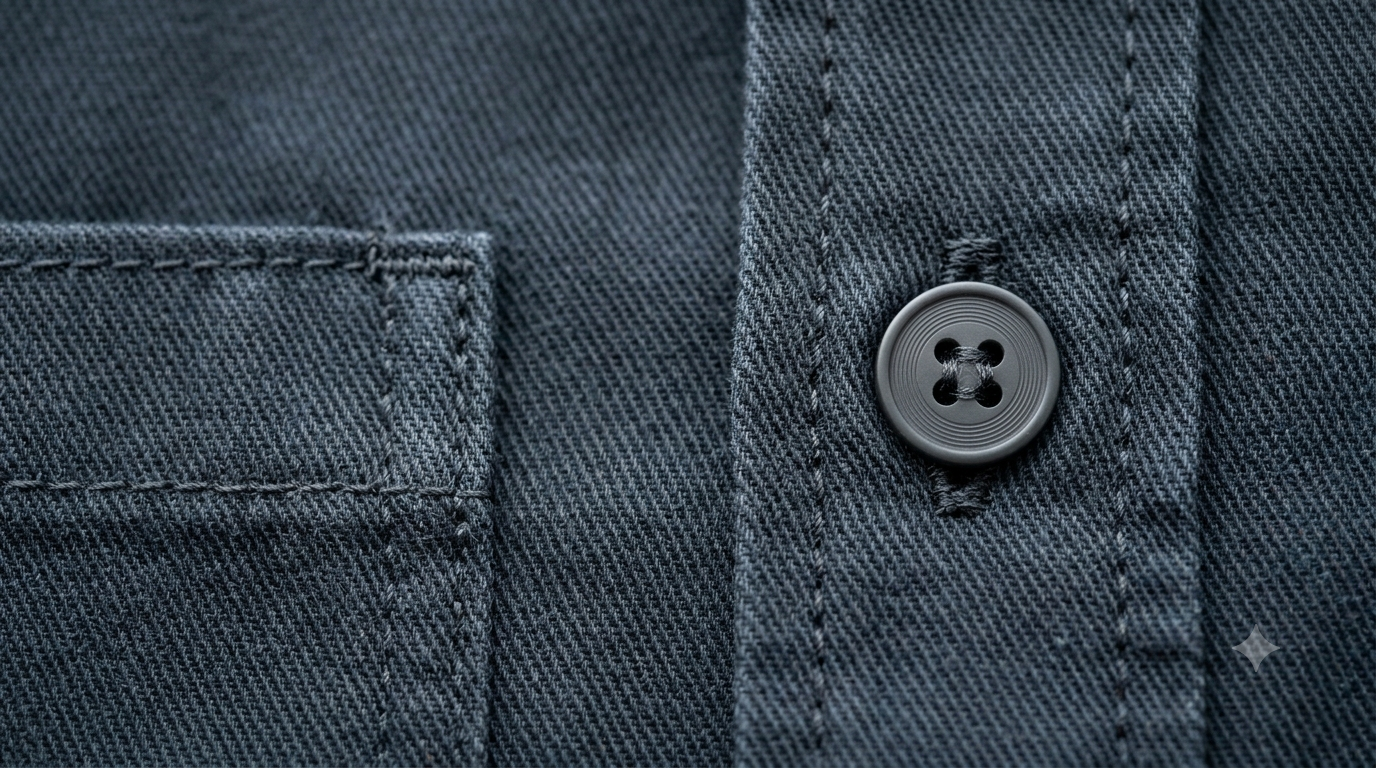
When people inspect a uniform, they usually look at the fabric first.
But construction matters just as much.
Look at:
Seams
Stitch density
Reinforcement
Button attachment
Pocket construction
Collar finishing
Cuffs
Zippers
Stress points
Why?
Because employees don't interact with a uniform gently.
They sit.
Stretch.
Reach.
Bend.
Carry.
Pull.
Wash.
Iron.
Repeat.
A garment can have excellent fabric and still fail prematurely because the construction doesn't match the demands placed on it.
That is why practical workwear specifications often consider reinforcement, stitching, mobility and garment construction alongside fabric composition.
The Working Environment Changes Everything
A uniform that works beautifully in an office may be completely wrong for a manufacturing floor.
A garment suitable for a hotel reception desk may not make sense for housekeeping.
A polished formal shirt might work perfectly for a sales executive meeting clients but become impractical for someone spending most of their day outdoors.
Think about the environment:
Office
Comfort, appearance, easy maintenance and fit may dominate.
Hospitality
Appearance, movement, frequent washing and stain management become important.
Healthcare
Comfort, cleanliness, movement and frequent laundering can become central considerations.
Manufacturing
Durability, movement and task-specific requirements become more important.
Field Work
Comfort, weather exposure, durability and practical movement may take priority.
The uniform should respond to the environment rather than pretend every employee works in the same one.
India's Climate Deserves Special Attention
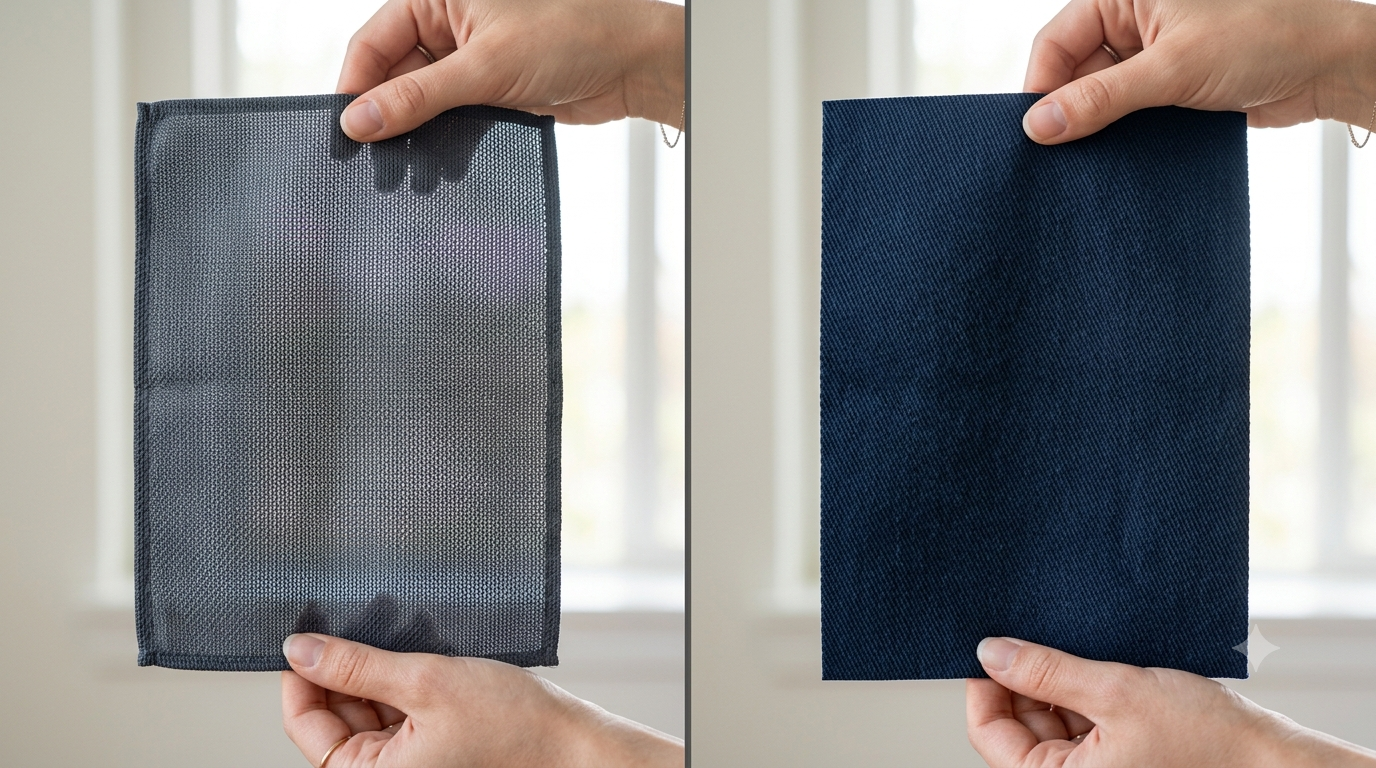
Uniform design becomes particularly interesting in India because working conditions vary enormously.
A uniform worn inside an air-conditioned office is not experiencing the same world as one worn outside for eight hours.
Heat and humidity can make small design decisions surprisingly significant.
A collar that feels fine at 10 AM may become irritating later.
A fabric that feels acceptable in a showroom may feel very different after several hours outdoors.
A dark, heavy garment may look excellent in a catalogue but be uncomfortable under direct sunlight.
This doesn't mean businesses should automatically choose the lightest or most breathable fabric.
It means climate should be considered before the uniform is finalised.
For warm environments, factors such as breathability, garment weight, moisture management, and freedom of movement deserve particular attention.
The Uniform's Washing Routine Is Part of Its Design
Here's a practical question:
Who will wash the uniform?
It sounds almost too simple.
But the answer matters.
A garment washed occasionally at home experiences a very different care cycle from one washed several times a week by a commercial laundry.
Consider a hospitality team.
Their uniforms may go through frequent washing.
Now consider a corporate office where a shirt may be worn once or twice a week.
The garments face completely different demands.
When selecting a uniform, businesses should therefore consider:
Washing frequency
Washing method
Drying method
Ironing requirements
Stain exposure
Colour retention
Shrinkage
Drying time
A uniform that is difficult to maintain may gradually stop looking like the uniform that was originally designed.
A Uniform's Real Life Is Longer Than Its First Impression
Imagine receiving a freshly delivered batch of uniforms.
Everything looks perfect.
The colours are sharp.
The embroidery is clean.
The garments are neatly packed.
Everyone is excited.
Now jump forward six months.
Some employees have washed their uniforms dozens of times.
A few garments have been worn more frequently than others.
Some have been ironed every week.
A few have been exposed to outdoor work.
One employee has managed to spill coffee on theirs more times than anyone can explain.
This is when the uniform reveals its true character.
Does the fabric still look good?
Does the stitching hold?
Does the collar maintain its shape?
Has the colour changed?
Are replacement garments still available?
That is durability.
Not how impressive the garment looked on delivery day.
Think in Terms of Cost Per Use
When comparing uniform options, businesses often compare the purchase price.
That's understandable.
But a more useful calculation can be:
Cost per useful wear.
Imagine:
Uniform A
₹800 per garment
Expected useful life: 8 months
Uniform B
₹1,100 per garment
Expected useful life: 18 months
Uniform B costs more upfront.
But it may be significantly more economical over its useful life.
Of course, actual durability depends on the garment, usage and care conditions. The point is not that expensive always means better.
The point is that purchase price alone doesn't tell the complete story.
For organisations buying hundreds of uniforms, this distinction can become meaningful.
The Hidden Cost of Uncomfortable Uniforms
There is another cost that rarely appears on a purchase order.
Employee dissatisfaction.
If a uniform is uncomfortable, people naturally start finding ways around it.
The sleeves get rolled.
The shirt gets left untucked.
The jacket gets removed.
An unofficial garment appears.
Sizing becomes inconsistent.
The uniform policy becomes something employees tolerate rather than something they naturally follow.
And the carefully designed professional appearance begins to disappear.
Comfort therefore isn't just an employee benefit.
It can influence uniform consistency.
A uniform employees are happy to wear is far more likely to be worn the way the company intended.
What About Appearance?
Durability and comfort are essential.
But we shouldn't pretend appearance doesn't matter.
A uniform still needs to represent the organisation.
The challenge is to make the three objectives work together.
A useful way to think about it is:
Comfort gets the employee through the day.
Durability keeps the garment working over time.
Design makes the uniform represent the organisation.
Remove any one of them and the result becomes weaker.
The 7-Point Uniform Quality Check
Before approving a uniform design, evaluate it against these seven areas.
1. Fabric
Is the material suitable for the working environment?
2. Weight
Is it appropriate for the climate and length of the working shift?
3. Fit
Can employees move naturally while wearing it?
4. Construction
Are seams, buttons, pockets and stress points built for the intended use?
5. Maintenance
Can the garment be washed and maintained realistically?
6. Appearance
Does it represent the company's visual identity?
7. Lifecycle
Can the organisation reorder and replace garments consistently?
If the answer is yes across all seven, you're getting much closer to a uniform that actually works.
Don't Forget the Human Being Inside the Uniform
Specifications are useful.
Fabric compositions are useful.
Measurements are useful.
But there is a person inside the garment.
Someone who may spend eight hours wearing it.
Someone who may work in heat.
Someone who may travel.
Someone who may bend, sit, lift, walk or stand throughout the day.
That is why good uniform design starts with empathy.
Ask:
What will this feel like at 9 AM?
Then ask:
What will it feel like at 6 PM?
And finally:
What will it look like after six months?
Those three questions can prevent a surprising number of poor uniform decisions.
Final Thought
The ideal uniform isn't the softest garment.
It isn't the strongest garment.
It isn't the most fashionable garment.
And it certainly isn't always the cheapest.
It is the garment that finds the right balance for the person, the role and the organisation.
It feels comfortable enough to wear.
It is durable enough to work in.
It looks professional enough to represent the brand.
And it remains useful long after the excitement of the first delivery has disappeared.
That is the real craft behind a good uniform.
**Not simply making clothing.
Making clothing that works.**
Frequently Asked Questions
What makes a uniform comfortable?
Comfort depends on several factors, including fabric, garment weight, fit, breathability, construction and freedom of movement. The right combination depends on the employee's role and working environment.
Which fabric is most durable for uniforms?
There is no single best fabric for every situation. Polyester and polyester blends are commonly valued for durability and easy maintenance, while different cotton and blended fabrics may provide a useful balance of comfort and strength.
Is cotton good for work uniforms?
Cotton can be a good choice where comfort and breathability are priorities. However, its suitability depends on the specific fabric construction, working conditions and maintenance requirements.
Are blended fabrics suitable for corporate uniforms?
Yes. Cotton-polyester blends are widely used because they can combine characteristics associated with both fibres, such as comfort, durability and easier maintenance.
How can businesses make uniforms last longer?
Choose fabrics and construction appropriate for the working environment, follow the manufacturer's care instructions, and account for washing frequency and working conditions when selecting the garment.
Should employees try uniforms before a bulk order?
Ideally, yes. Sample fitting can identify sizing and comfort issues before a large quantity is produced.
About Uniformat
At Uniformat, the objective is not simply to produce a uniform that looks right when it leaves the factory.
The better objective is to create workwear that continues to look right, feel right and perform right throughout its working life.
Because the best uniform isn't the one that survives the catalogue photograph.
It's the one that survives the working day.
Planning uniforms for your team?
Share your employee roles, working environment, preferred style and approximate quantity with Uniformat. We can help you think through the right balance of comfort, durability and professional appearance before you place your order.
Request a bulk quoteTags
- #Workwear
- #Uniform Fabric
- #Corporate Uniforms
- #Employee Comfort
- #Durable Uniforms
- #Custom Uniforms
- #Workwear India